Heating and cooling

KNX control of temperature, heating and cooling

KNX control of heating and cooling allows the temperature to adapt to how the space is actually used, rather than the whole building running in the same mode all the time. Amplituda integrates the available functions of the HVAC systems into a common control logic and, according to the design, divides the building into independent temperature zones. The user can define schedules, away modes and desired temperatures and view them in the visualisation. With properly configured remote access, the temperature can also be monitored and changed when the user is not at home, for example before returning from a trip.

Automation can be linked with shading and other functions that affect thermal comfort. The integration method always depends on the specific HVAC equipment and the available communication interfaces.

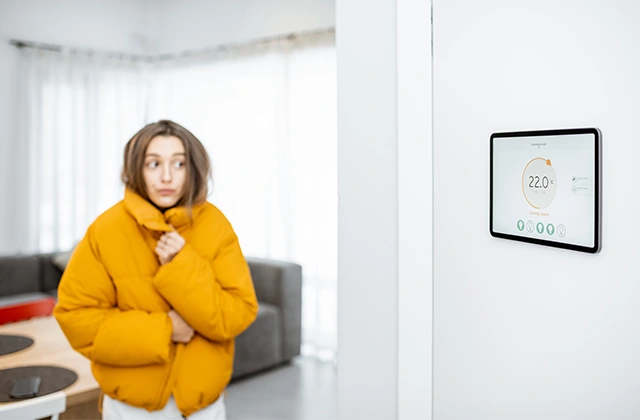
Woman keeping warm on a sofa next to a wall thermostat – KNX temperature control

Temperature for each actual zone

The living room, bedroom, bathroom and study do not have the same temperature needs, nor are they used at the same time. When the HVAC system supports zone control, KNX can combine information from thermostats or sensors and control the corresponding heating or cooling room by room. Comfort is thus achieved where it is needed, without necessarily keeping the same temperature throughout the building. In larger residences, commercial spaces and hotels, a zoned approach also makes it easier to organise different usage modes. It is important that the control concept is defined together with the mechanical design, because automation cannot make up for a system that was not technically designed for independent zone control.

Schedules and away modes

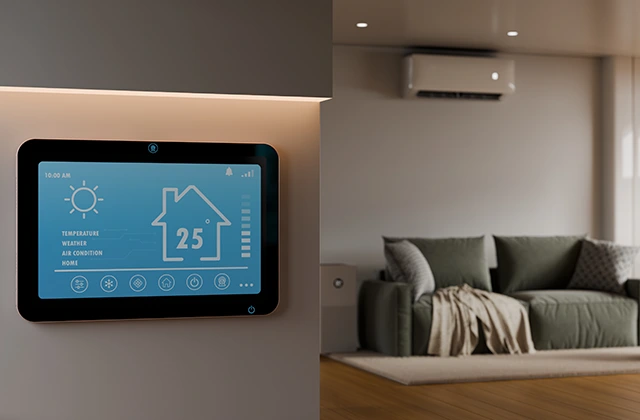
The system can adjust set temperatures according to the time of day, the day of the week or the occupancy mode. When leaving the building, an economy mode can be activated, and before the usual return the space can be brought back to a comfortable temperature. With properly configured remote control, the heating can, for example, be switched on before returning from a trip. Such logic reduces the need for manual thermostat changes and helps avoid unnecessary heating or cooling of empty rooms. The user should still be able to change the set value easily when plans change, which is why automation and manual control must be coordinated.

Wall touch panel showing room temperature – heating schedules and away mode
Bright office with automated blinds and a comfortable temperature

Shading as part of thermal protection

Heating and cooling can be more efficient when the system knows what is happening with the shading and solar radiation. In summer, timely shading of large glazed surfaces can reduce solar gains and relieve the cooling system. In the colder months, if designed accordingly, the system can allow solar heat to be used when it is beneficial. KNX enables this information to be exchanged between subsystems, while the specific rules depend on the orientation of the building, the type of shading and the HVAC equipment. Integration does not replace good heating, cooling or insulation; it allows the existing equipment to work in better harmony with the conditions in the space and the users’ habits.

Overview and control in a single interface

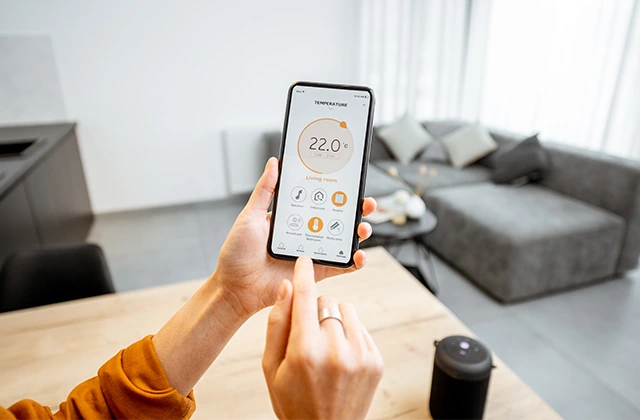
Temperature zones can be displayed in the KNX visualisation together with lighting, shading and other functions. The user can see the measured and set temperature, the active mode and other available statuses in one place, without needing several unconnected apps.

Remote control is useful for buildings that are used only occasionally, but also in everyday situations when the user wants to change the mode before arriving. The level of detail shown should be adapted to the user: a technical service interface can be detailed, while everyday control should remain simple. The purpose of visualisation is not to expose all the complexity of the HVAC system, but to provide clear control of comfort.

Controlling temperature zones via a smartphone app

Comfort does not mean the whole building has to be at the same temperature all the time – the system should follow the actual needs of each space. Automation makes the most sense when heating, cooling and shading work together, instead of each system reacting on its own.