Lighting control

KNX lighting, dimming and intelligent light control

Lighting has a strong influence on the atmosphere, functionality and experience of a space. Amplituda designs and programs KNX lighting control that connects light fittings, sensors, switches and scenes into a logical system. With a single touch, the user can activate the desired combination of lights, from a working or evening mode to a cinema scene or switching everything off when leaving. Automation can respond to presence, the amount of daylight or the time of day, while keeping simple manual control.

In more demanding projects, lighting can be connected to a DALI system, blinds, visualisation and other building functions. Timely design is important because different light sources and control methods require a suitable installation. The control switches can also be chosen as part of the interior design.

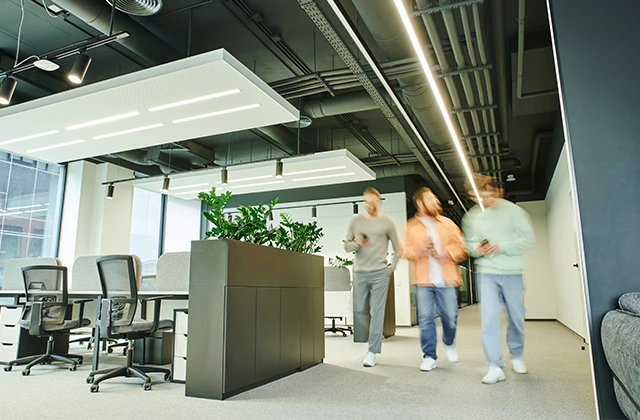
Office with linear LED lighting – KNX lighting control

Scenes instead of a row of switches

In spaces with several lighting circuits, conventional control quickly becomes confusing. Scenes allow the user to set several groups of lights to predefined levels with a single command. Modes can be prepared for dinner, reading, cleaning, a presentation, watching a film or leaving the building.

Where needed, a scene can also involve other systems, for example lowering the blinds or starting an audio/video function. This reduces the number of everyday actions, while the user can still change individual lights whenever they wish. In larger residences, hotels and commercial spaces, this approach makes more complex lighting much easier to use.
Sensors and daylight

Presence and light-level sensors allow the lighting to work according to actual conditions, not just manual commands. In corridors, bathrooms, garages and outdoor areas, the lights can switch on when needed and switch off once activity has stopped.

In spaces with large glazed areas, the system can take the amount of daylight into account and reduce unnecessary artificial lighting. Linking with the blinds further improves the result, because natural and artificial light can be treated as a shared resource. Such automation brings comfort as well as more rational electricity consumption without constant intervention by the user.

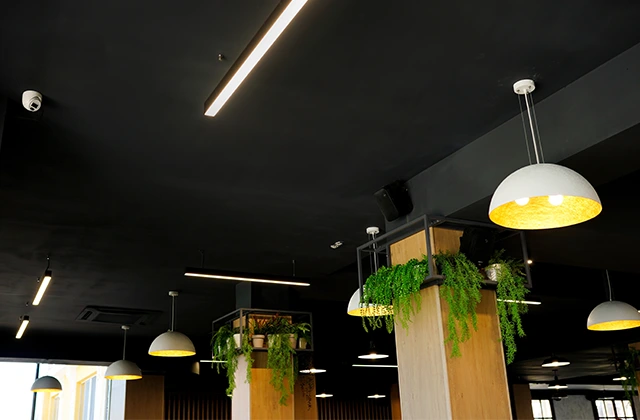
Pendant lights and linear lighting in a commercial space
Space with lighting controlled by presence and daylight sensors

DALI, dimming and light quality

Different light fittings and drivers are not controlled in the same way, so the desired functions must be matched to the chosen lighting equipment before the installation is carried out. KNX can be connected to a DALI (Digital Addressable Lighting Interface) system when the project requires addressable control of a large number of light fittings or more advanced scenes.

Dimming allows the intensity to be adjusted, and with suitable fittings parameters such as colour temperature can also be controlled. These options only make sense when they reflect the purpose of the space and the architectural concept. That is why Amplituda links lighting design with technical feasibility, the control concept and future serviceability, instead of adding functions only after the light fittings have been chosen.

Switches as part of the interior

In a KNX system, a single switch can control several functions or scenes, so the wall does not have to be filled with a row of conventional switches. For this category, Amplituda presents designer and functional solutions from TENSE, Lithoss and Schneider Electric.

TENSE and Lithoss take a strongly design-led approach, with a variety of materials and finishes, while Schneider Electric offers a wide range of KNX control elements and solutions. Switches can control lighting, blinds or other functions, depending on the project, but the layout of functions must remain intuitive. Design and ergonomics are therefore coordinated with the automation logic, the architecture of the space, the budget and the users’ habits.

Selecting light colour and intensity via a smartphone app

Good lighting does not ask the user to control every light fitting separately – it is enough to choose the atmosphere or activity they want. When lighting, sensors and blinds are properly connected, a space can use more daylight and less unnecessary energy.

Frequently asked questions

Can KNX lighting be controlled from a mobile phone?

Yes. Lighting can be included in KNX visualisation and controlled via a smartphone, tablet or touch panel.

What are lighting scenes?

Scenes are predefined combinations of several lighting groups and light levels that are activated with a single command.

Can the lights switch on automatically based on presence?

Yes. Presence and light-level sensors can control the lighting according to actual conditions and the rules of the project.

When should KNX lighting be planned?

Ideally before the electrical installation is carried out, because the chosen light fittings, dimming method and any DALI integration may require different infrastructure.

As well as reducing electricity consumption, our solutions let you create scenes so that with a single touch you can switch off all the lights, switch on Theatre/Cinema mode or activate any combination of light fittings you like.

Preparing a lighting design in good time makes the later implementation of an intelligent control system much easier, because different types of lighting require an installation suited to the chosen type of light fitting, and the control elements change along with the installation.

We can offer you switches from renowned manufacturers to suit every taste and budget!