Schneider Electric and KNX

Intelligent control for homes and buildings

A modern building is no longer just a collection of separate electrical installations. Lighting, heating, cooling, shading, energy metering and security systems need to work together reliably and simply. Schneider Electric develops solutions that combine automation, power distribution and digital management, while Amplituda turns this technology into a complete KNX system tailored to the specific space and its users.

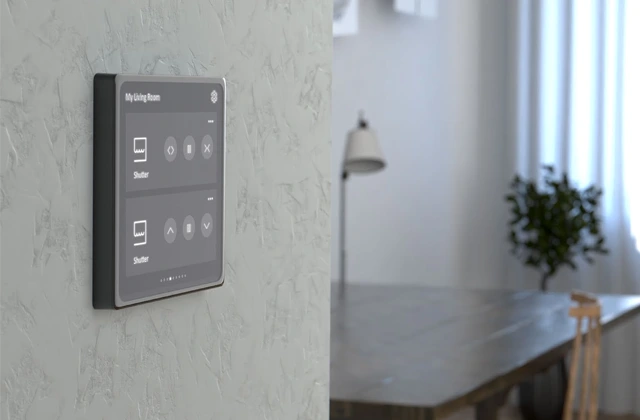
Schneider Electric KNX control panel on a wall

One system for different building functions

A conventional installation usually requires separate control elements and controllers for each function. KNX automation connects them into a common system in which devices exchange information and respond according to predefined rules.

Lighting, temperature, ventilation and shading can thus adjust automatically to the time of day, the presence of users and conditions in the room. The user keeps simple control via a push-button, screen or mobile app, while the complex processes run in the background.

The result is a more comfortable space, better monitoring of the installations and more efficient use of energy.

SpaceLogic KNX – an open automation platform

SpaceLogic KNX comprises Schneider Electric devices and components for automating residential, commercial and other buildings. The system can include KNX push-buttons and sensors, actuators, temperature controllers, blind control, DALI gateways, power supplies, IP interfaces and other components needed for a reliable installation.

Because it is based on the internationally accepted KNX standard, the system can be connected with compatible equipment from different manufacturers. The client is therefore not tied to a single closed ecosystem, and the installation can be extended and adapted throughout the life of the building.

A properly designed KNX system is equally suitable for new builds and for the thorough modernisation of an existing space.

Schneider Electric SpaceLogic KNX thermostat showing 26.5 °C
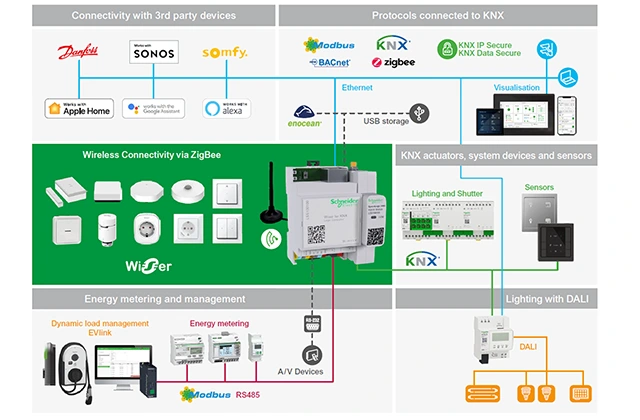
SpaceLogic KNX platform diagram – devices and connected systems

What does automation look like in everyday use?

The value of a smart system is best seen in simple everyday situations. A single press of a button can activate a “Leaving” scene, switch off the lights, lower the temperature and move the blinds to the desired position. An “Evening” scene can dim the lights in the living area, close the blinds and prepare a comfortable temperature.

Presence sensors can switch on the lighting only when a space is in use, while light sensors make it possible to take advantage of daylight. Motorised blinds can respond to the position of the sun and prevent rooms from overheating. Heating and cooling can be controlled separately for each zone, without unnecessary consumption in empty rooms.

Automation does not mean losing control. The user can change settings manually or activate the desired scene at any time.

Energy management without compromising comfort

Efficiency does not come from installing energy-saving equipment alone. It is important to know when, where and how a building uses energy.

By linking energy metering, usage schedules, sensors and automated rules, lighting, heating, cooling and larger loads can be controlled more precisely. The system can limit unnecessary equipment operation, warn of unusual consumption and give the user a clear overview of the building’s energy performance.

Actual savings depend on the purpose of the building, the quality of the building envelope, the existing installations and the way the building is used, which is why Amplituda considers each project individually.

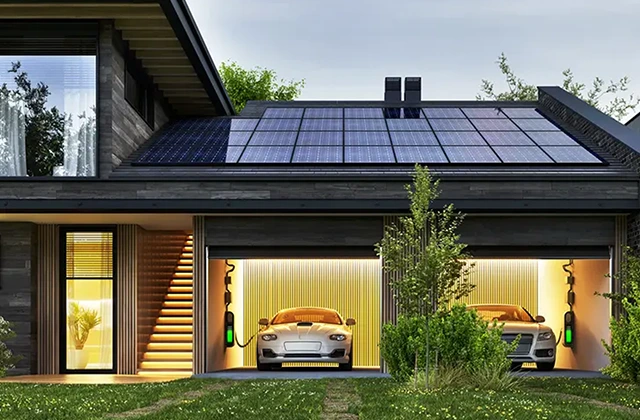
House with solar panels and EV charging – energy management
User monitoring energy consumption on screen – Schneider Electric KNX

From smart homes to commercial and hotel buildings

In houses and apartments, the emphasis is usually on comfort, simple control, security and individual scenes. Schneider Electric also offers Wiser solutions for the connected home and energy monitoring, whose use depends on the market, the technical requirements and the needs of the project.

In hotels, KNX can connect guest rooms, corridors and common areas. Room occupancy status, lighting, temperature and blinds can be adapted to the guest, while staff gain better control over the operation of the building.

In offices and commercial buildings, automation enables zone control, adaptation of spaces to different users and integration with a higher-level building management system. Similar solutions can be applied in educational, healthcare, retail and public buildings.

Technology that blends into the architecture

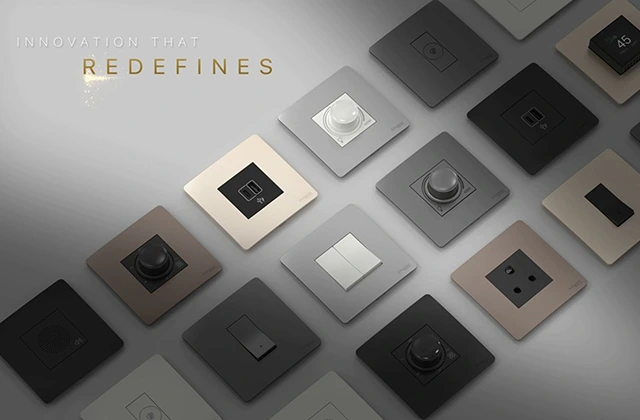
A smart space should not look technically cluttered. Control elements must be logically positioned, easy to use and in harmony with the interior.

Schneider Electric offers various designs of switches, sockets and control elements, so the design can be chosen to suit the character of the space. Amplituda works with clients, architects and interior designers to coordinate the technical functions in good time with the lighting design, furniture and finishes.

Schneider Electric push-buttons in various finishes – Redefined
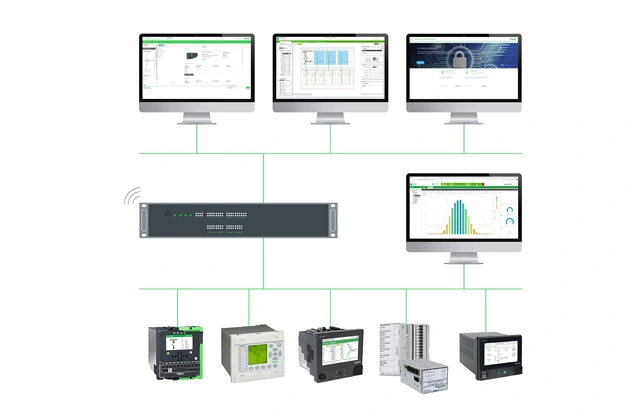
Schneider Electric building management system diagram

EcoStruxure and complete building management

In larger and technically more demanding buildings, KNX can be part of a wider BMS solution. Schneider Electric EcoStruxure Building Operation brings together the monitoring and control of various building systems, including heating, ventilation, air conditioning, lighting, energy metering and other technical systems.

Operators can monitor equipment status, alarms, trends and consumption in one place. This overview makes everyday operation, timely maintenance and decisions based on real data easier.

Amplituda – Schneider Electric and KNX partner for complete delivery

The quality of automation does not depend on the chosen equipment alone. Needs analysis, design, programming, commissioning and long-term support are just as important.

Amplituda is involved in the entire process: from defining functions and selecting Schneider Electric components to KNX programming, creating scenes, integrating subsystems, testing and user training. The system is documented so that future maintenance, upgrades or changes to functions are simpler and safer.

The goal is not to install as much technology as possible, but to design a system that delivers real value to the user every day.

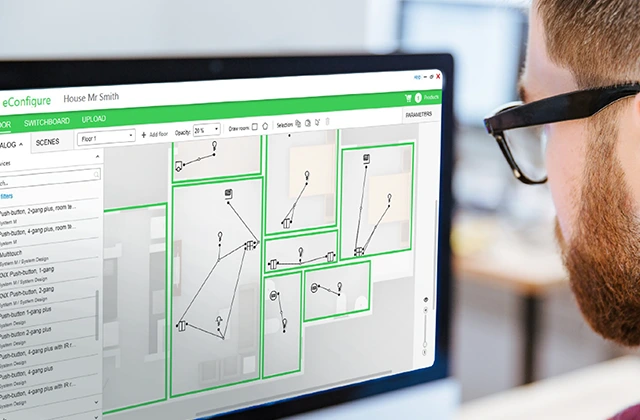
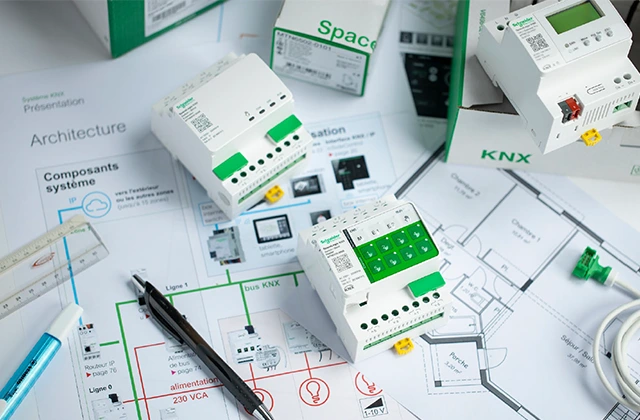
SpaceLogic KNX modules on project documentation

Explore the Schneider Electric SpaceLogic KNX catalogue.

Schneider Electric automated digital solutions for efficiency and sustainability