KNX shading control

Automation of blinds, roller shutters and venetian blinds

Shading automation allows roller shutters, venetian blinds and awnings to respond to the users’ needs and the conditions around the building. Amplituda integrates electric motor drives into the KNX system so that shading can be controlled with switches, scenes, an app or automatic rules. The position of the venetian blinds can be adjusted to the amount of daylight and the position of the sun, increasing comfort and potentially reducing overheating.

Shading can be linked with lighting, heating and cooling, and selected security scenarios. Depending on the project, awnings, garage doors and other motorised elements can also be included in the shared control. Automation should not take control away from the user: a local switch or the visualisation should always allow the position to be changed easily when needed.

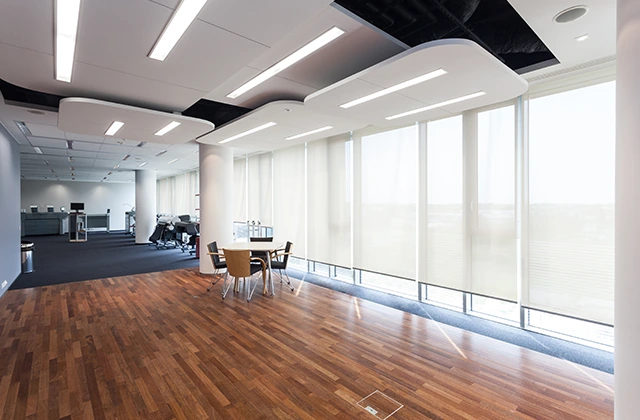
Office space with automated blinds on large glass walls

Daylight under control

An automated blind is more than a motor that raises or lowers a shutter. With venetian blinds, the system can adjust the position and angle of the slats to keep enough natural light in the room while reducing direct sunlight.

With light sensors or a weather station, responses can be defined according to the position of the sun and the weather. This improves visual comfort and privacy, and in warmer periods timely shading can reduce the heating of glazed surfaces. Automation is adapted to the orientation of the façade, the type of shading and the users’ habits, because the same position is not optimal for every room.

Shading and energy logic

Shading can actively work together with lighting and with heating and cooling. In summer, a room can be shaded before it overheats, reducing the need for additional cooling. In winter, when conditions are favourable, solar heat can be used. At the same time, the lighting can respond to the amount of available daylight. Such coordination makes more sense than each system working completely separately.

KNX serves as the common communication basis, while the specific rules are defined according to the architecture, the HVAC system and the desired level of automation. The user does not have to monitor each condition individually, but can take manual control at any time.

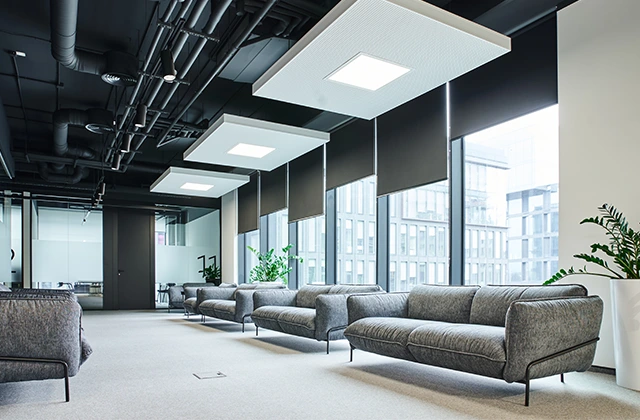
Living room with blinds coordinated with lighting and air conditioning
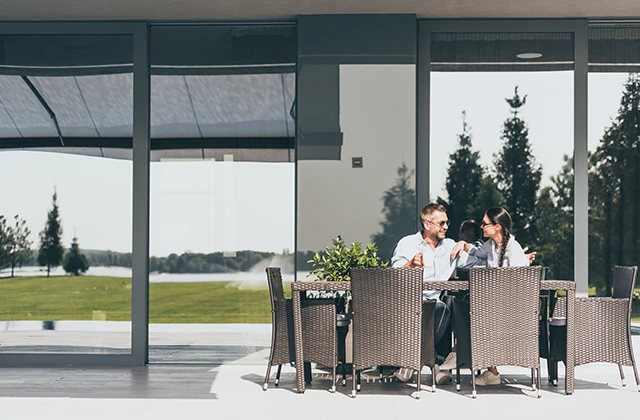
Terrace with a glass wall and blinds – sun protection

Scenes for leaving, arriving and cinema

Shading is a natural part of a building’s shared scenes. When leaving, selected roller shutters can be lowered together with switching off the lights and arming the technical security system. In the morning, certain blinds can be raised according to a schedule, while a cinema scene can darken the room before the projection starts. If the chosen equipment supports it, checking the status of motorised garage doors and linking them with other building functions can also be included in the same system.

The advantage of integration is not a large number of automations, but having repetitive actions carried out logically and predictably, without the user having to control each motor or app separately.

Awnings and protection of outdoor elements

With external shading, the weather is not just a matter of comfort but also of protecting the equipment. Depending on the type of drive and the available sensors, awnings or other sensitive motorised elements can respond to strong wind or other adverse conditions. Such a function should be designed according to the manufacturer’s technical limitations, not as a universal rule. Other motorised elements, such as garage doors, can also be included in the same KNX control, but their safety mode and control method differ from those of shading.

That is why Amplituda adapts the logic to the function of each drive, while trying to give the user a shared, understandable way of controlling everything via switches, scenes or visualisation.

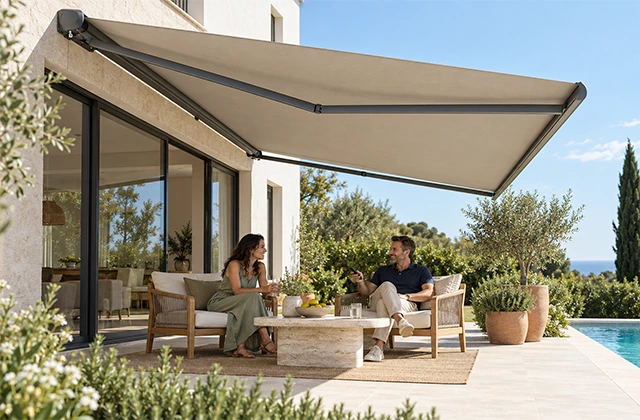
Motorised awning over a poolside terrace

Frequently asked questions

Can roller shutters be lowered automatically according to the position of the sun?

Yes. With suitable sensors or a weather station, the system can adjust the shading according to the intensity and direction of solar radiation.

Can shading be controlled from a mobile phone?

Yes. Shading can be included in KNX visualisation and controlled via a smartphone, tablet or touch panel.

Can the system also control garage doors?

Yes, depending on the type of drive and the project. Garage doors can be integrated into the shared control with separately defined safety conditions.

Do automatic blinds help reduce cooling in summer?

They can. Timely shading of glazed surfaces reduces solar gains and the load on the cooling system.